
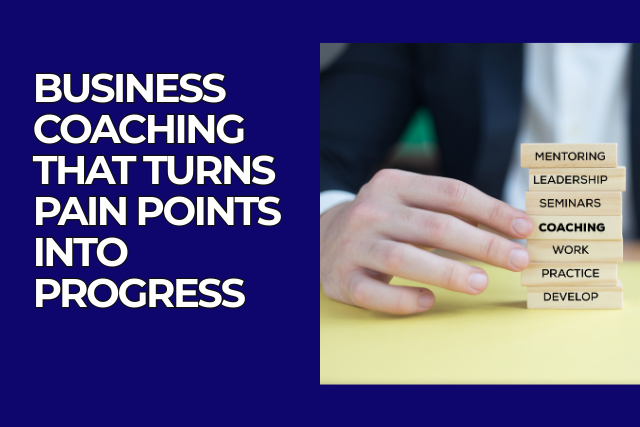
Introduction: When Growth Feels Harder Than It Should
Every business reaches a moment when effort no longer guarantees progress. The hours are long. The stakes are high. Yet forward momentum feels elusive. This friction is not uncommon, but it is often misunderstood.
Pain points are not signs of incompetence. They are indicators. Signals that systems, decisions, or leadership approaches have reached their limits. Business coaching exists to decode these signals and convert them into structured progress.
Understanding Business Pain Points
Pain points rarely arrive in isolation. They manifest as missed deadlines, unclear priorities, strained teams, or unpredictable cash flow. Individually, they seem manageable. Collectively, they erode confidence and capacity.
Operational inefficiencies create drag. Financial ambiguity breeds hesitation. Leadership gaps amplify stress. Left unaddressed, these issues compound quietly, transforming manageable challenges into persistent obstacles.
The Role of Business Coaching in Transformation
Business coaching is not about providing quick answers. It is about creating durable clarity. Unlike consulting, which often prescribes solutions, coaching strengthens the decision-making muscle of the business itself.
Through structured dialogue and strategic frameworks, coaching cuts through noise. It replaces assumption with insight. Leaders gain the ability to see their business as a system rather than a series of disconnected problems.
From Confusion to Strategic Direction
Many business owners are busy without being effective. Activity masquerades as progress. Coaching introduces discernment.
By examining goals, constraints, and priorities, coaching helps leaders identify what truly matters. Focus sharpens. Energy consolidates. What once felt overwhelming becomes navigable through deliberate sequencing and strategic intent.
Operational Pain Points Turned into Process
Operational pain often stems from invisible inefficiencies. Redundant steps. Unclear ownership. Processes that evolved accidentally rather than intentionally.
Coaching brings these inefficiencies to the surface. It replaces improvisation with design. Documented workflows, clear expectations, and consistent execution transform operational chaos into dependable process. The business begins to run with less friction and greater predictability.
Leadership Challenges Reframed as Growth Opportunities
Leadership pain points are deeply personal. Decision fatigue. Reluctance to delegate. The constant sense of being needed everywhere at once.
Coaching reframes these struggles. Rather than weaknesses, they become developmental inflection points. Leaders learn to delegate with clarity, decide with confidence, and lead without exhaustion. Authority shifts from reactive to intentional.
Accountability That Drives Momentum
Insight alone does not create change. Execution does. Coaching introduces accountability structures that convert intention into action.
Regular check-ins, measurable commitments, and reflective reviews create momentum. Progress becomes visible. Consistency replaces sporadic effort. Accountability evolves from external pressure into an internal standard.
Mindset Shifts That Sustain Progress
Lasting progress requires a shift in perspective. Coaching helps leaders move from reactive problem-solving to proactive design.
Challenges are no longer interruptions. They become data. This mindset cultivates resilience, adaptability, and composure. The business grows stronger not because obstacles disappear, but because leadership capacity expands.
Measuring Progress Beyond Revenue
Revenue matters. But it is not the only indicator of progress. Coaching broadens the lens.
Clarity of direction. Stability of operations. Confidence in decision-making. These markers signal sustainable growth. When these elements strengthen, financial performance often follows as a byproduct rather than a pursuit.
Conclusion: Progress Is Built, Not Willed
Progress is not the result of sheer determination. It is the outcome of alignment, structure, and disciplined execution.
Business coaching transforms pain points into progress by addressing root causes rather than symptoms. When leaders gain clarity and systems gain strength, growth stops feeling like a struggle. It becomes a process—repeatable, resilient, and real.
Your business deserves support—get your free consultation today!